
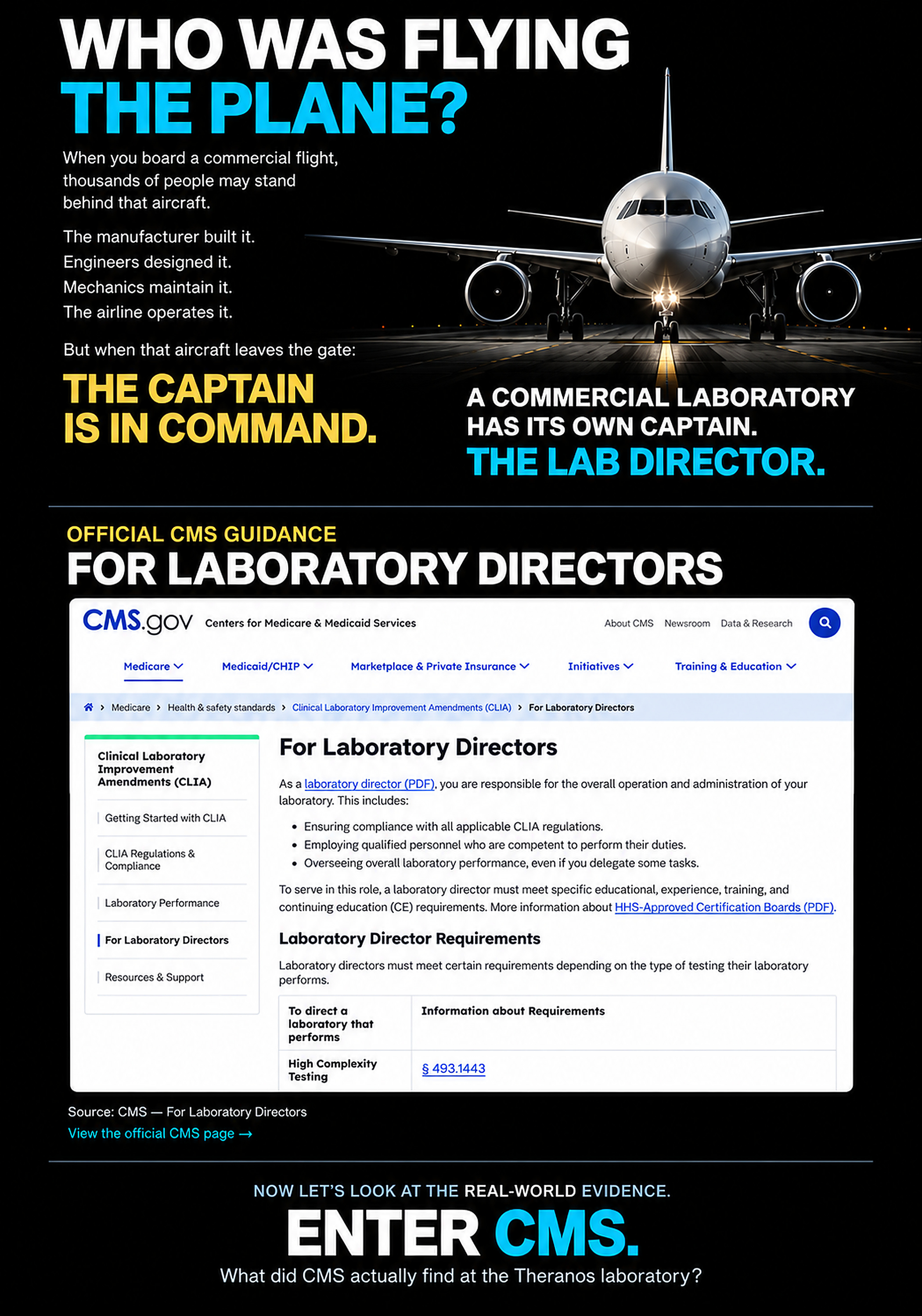
Source: CMS — For Laboratory Directors →
THERANOS WAS VERTICALLY INTEGRATED.
Traditional diagnostic companies and clinical laboratories often occupy different parts of the system. Companies such as Siemens, Roche and Abbott manufacture analyzers and assays; clinical laboratories operate testing systems under their own laboratory governance.
MANUFACTURER
Technology.
Analyzer platform.
Assays and reagents.
Instrument engineering.
CLIA LABORATORY
Patient testing.
Personnel.
Procedures.
Quality systems.
Result reporting.
UNDER ONE CORPORATE ROOF.
That makes the story easy to blur. But manufacturing a testing platform and operating a CLIA laboratory are still different functions with different questions.
ENTER CMS.
CMS inspected the Theranos clinical laboratory. Now we can stop speaking in generalities.
FINDING #1 — QUALITY CONTROL.
The first deficiency shown here is D5481 — Control Procedures. CMS said the laboratory failed to ensure acceptable quality control before reporting some patient results.
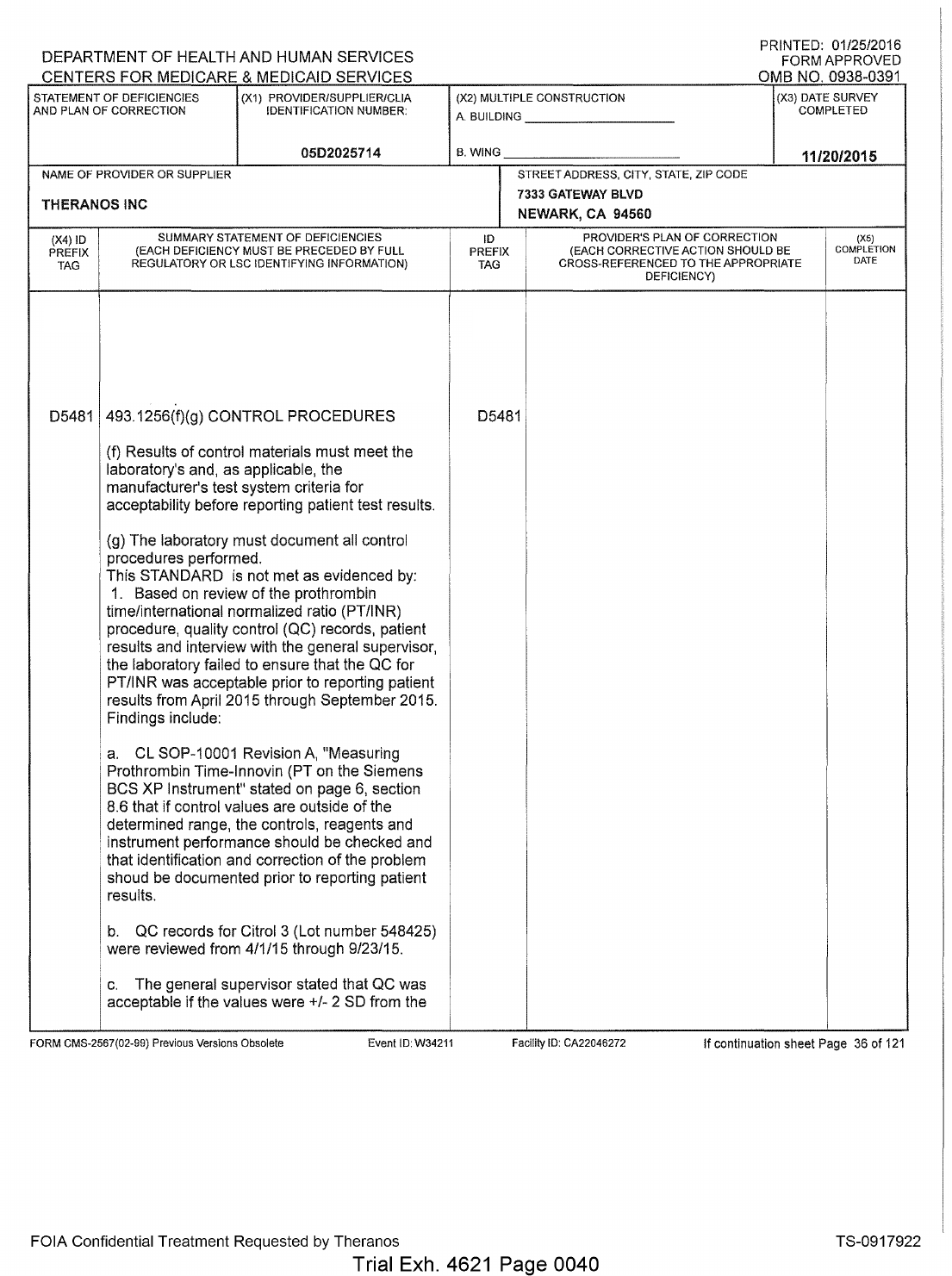
The inspection covered both conventional laboratory equipment and Theranos’ Proprietary System. On the Edison/TPS side, the report quotes Theranos’ own QC procedure: for a single Edison instrument, QC was to be rejected if either QC level exceeded the stated limit or repeatedly failed on the same side of the mean.
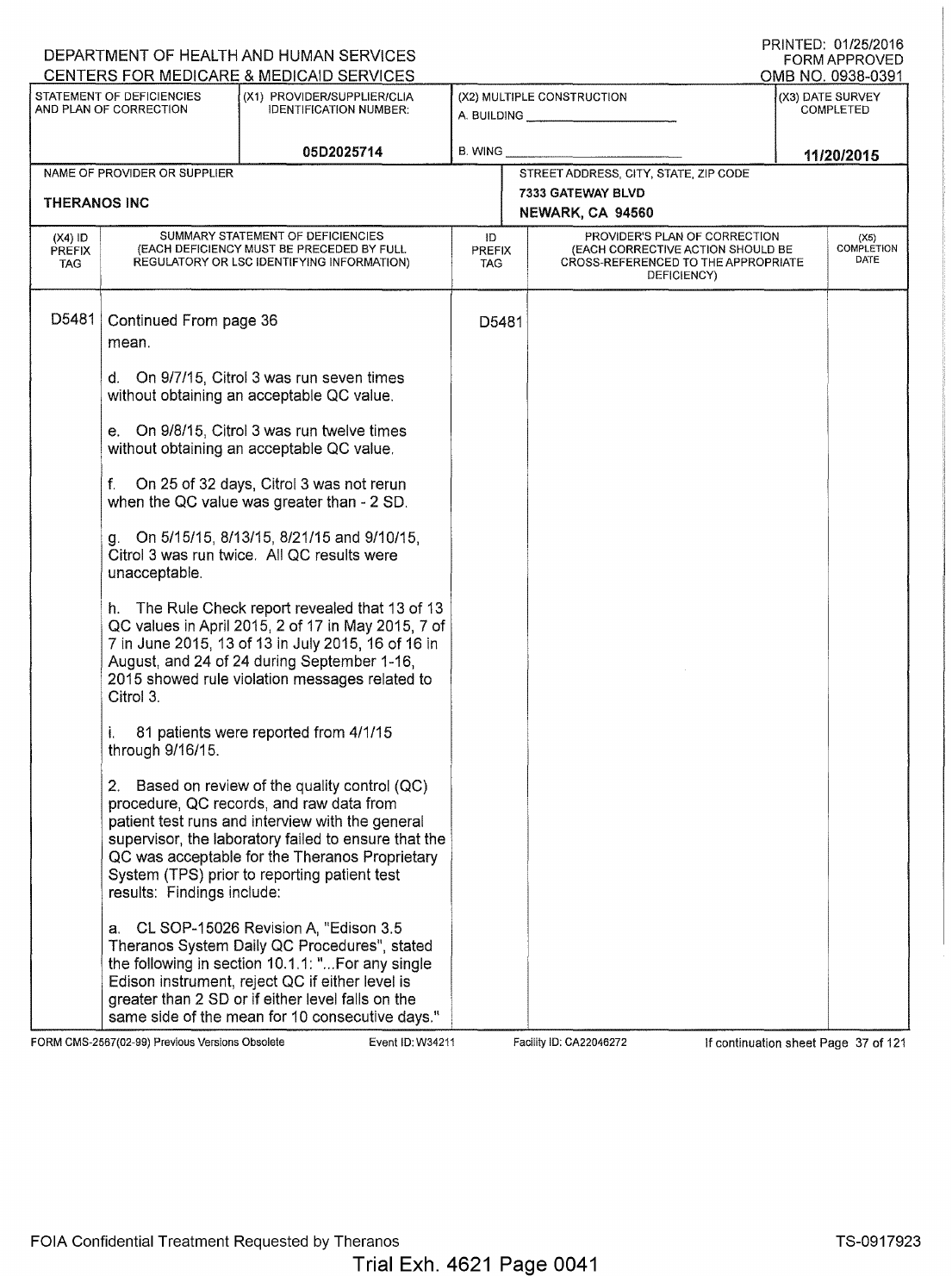
THE MACHINE HAD QUALITY-CONTROL RULES.
CMS FOUND PROBLEMS WITH HOW THE LAB OPERATED AROUND THEM.
Then comes a detail that matters to the machine-versus-lab distinction. The general supervisor told CMS that when QC was unacceptable, the TPS device locked out patient testing for 24 hours or until QC was acceptable; if QC remained unacceptable, another device would be used.
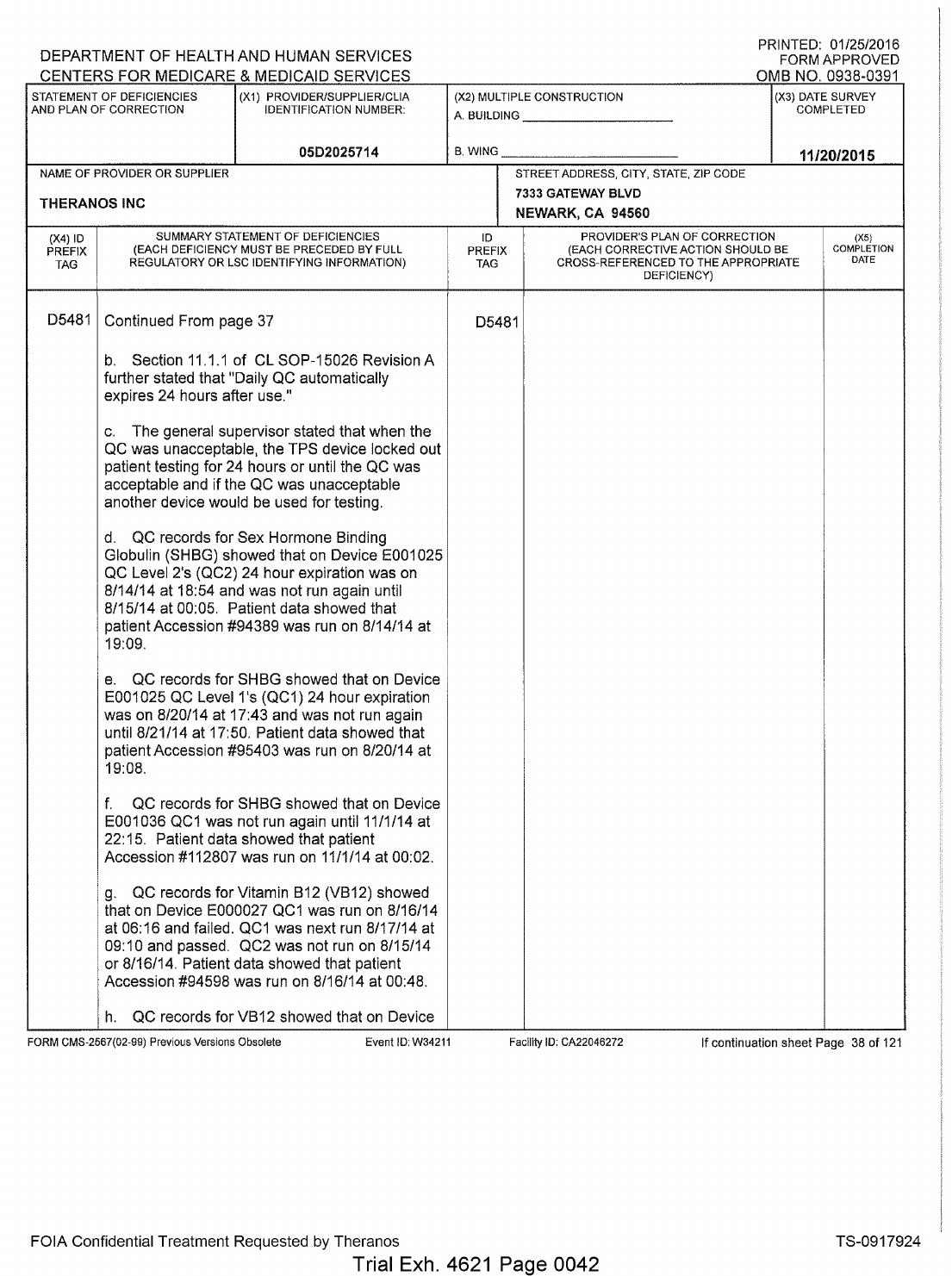
AND COULD LOCK OUT TESTING.
SO WHAT HAPPENED
AFTER THE WARNING?
FINDING #2 — METHOD COMPARISON.
CMS next cited D5775 — Comparison of Test Results. When a laboratory performs the same test using different methodologies or instruments, the regulation requires a system for evaluating and documenting the relationship between those results.
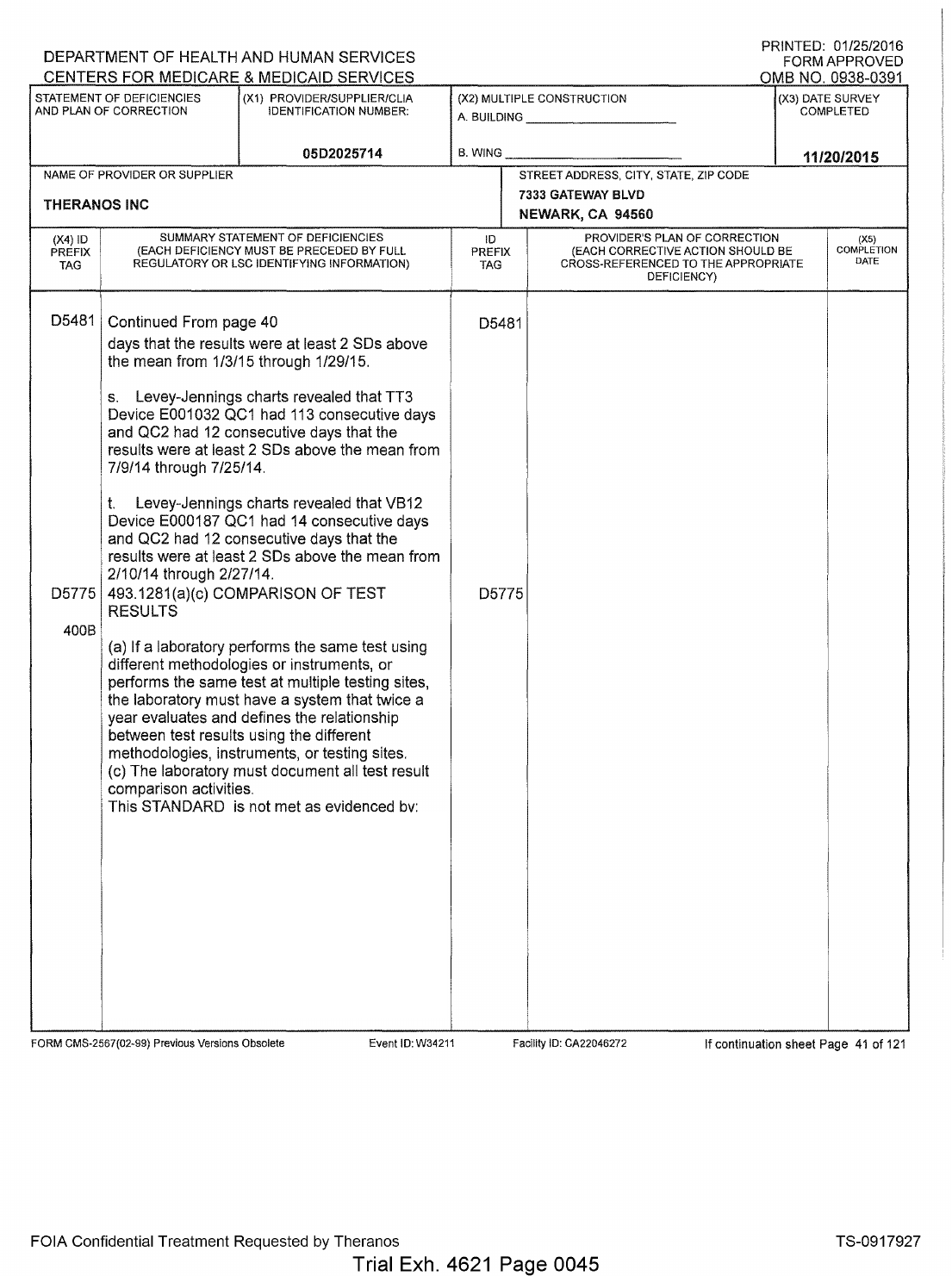
CMS said the laboratory lacked an adequate twice-yearly comparison system between the Theranos Proprietary System (Edison) and predicate instruments for several assays. The following pages describe devices that were used for patient testing but were not included in the comparison studies.
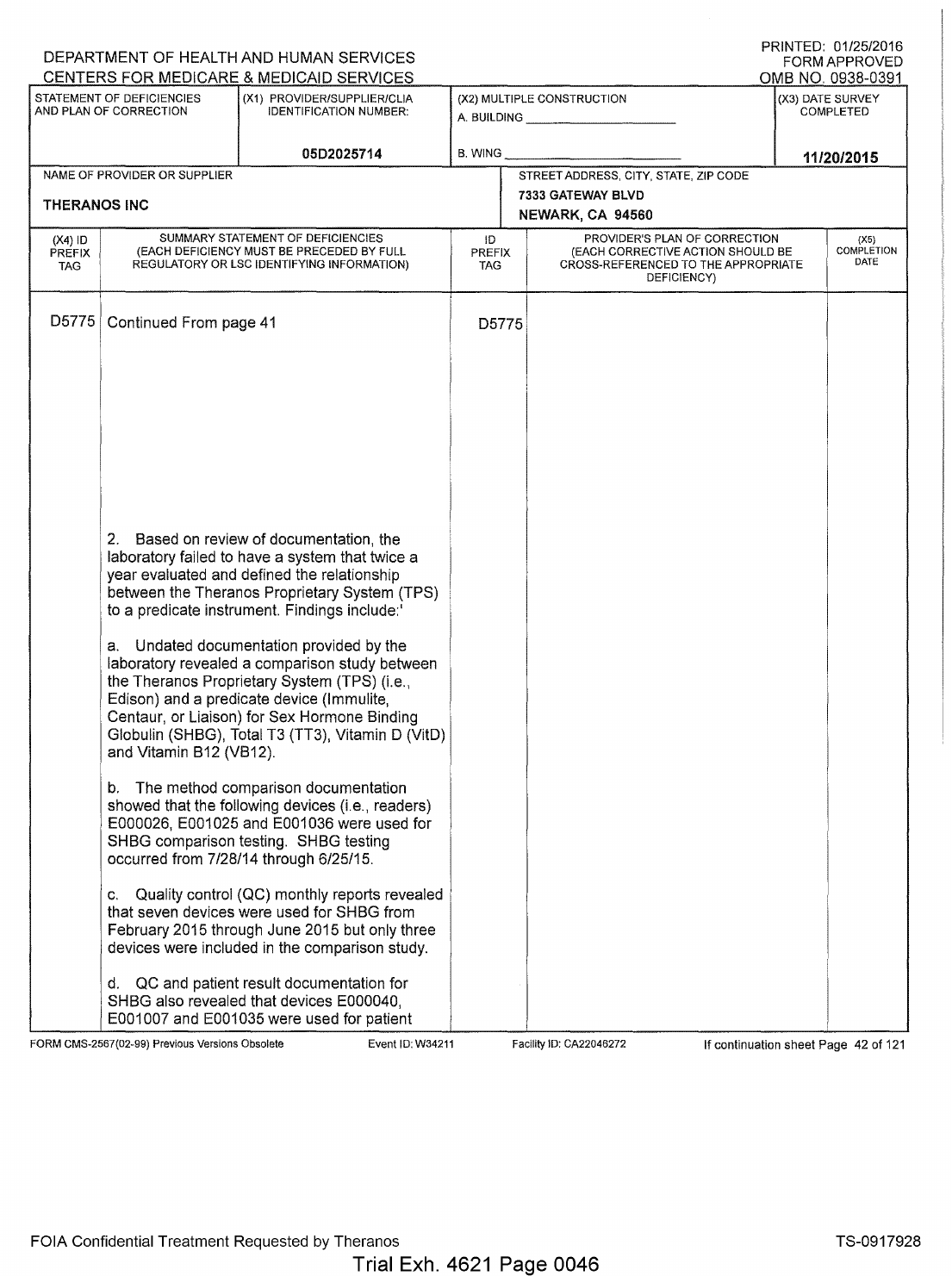
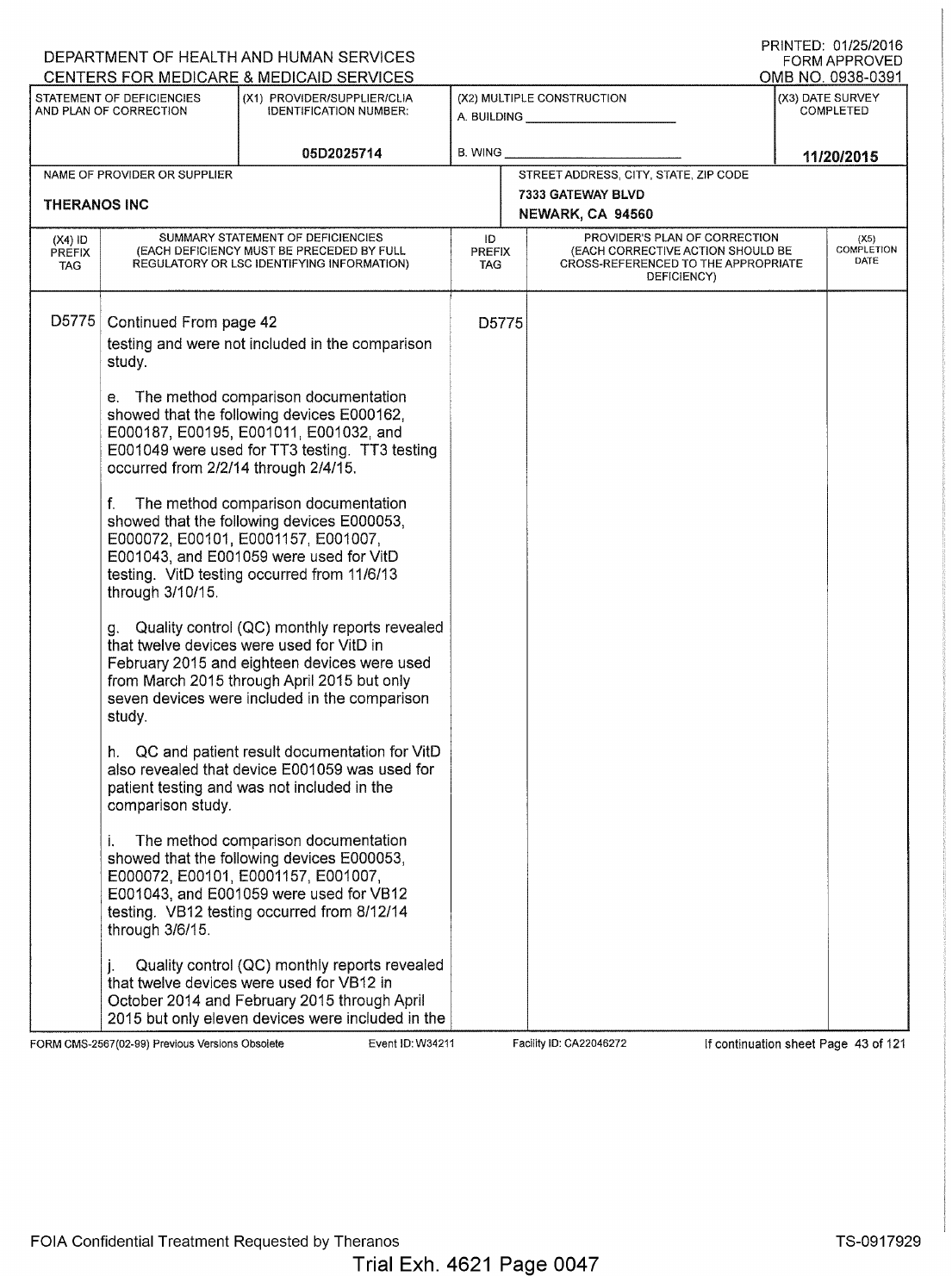
THAT IS A LABORATORY QUALITY-SYSTEM QUESTION.
WAS THE LAB PROPERLY MONITORING AND DOCUMENTING THE RELATIONSHIP BETWEEN ITS TESTING SYSTEMS?
FINDING #3 — QUALITY ASSESSMENT.
CMS also cited D5791 — Analytic Systems Quality Assessment. The laboratory was required to maintain written policies and procedures for monitoring analytical systems, identifying problems and correcting them.
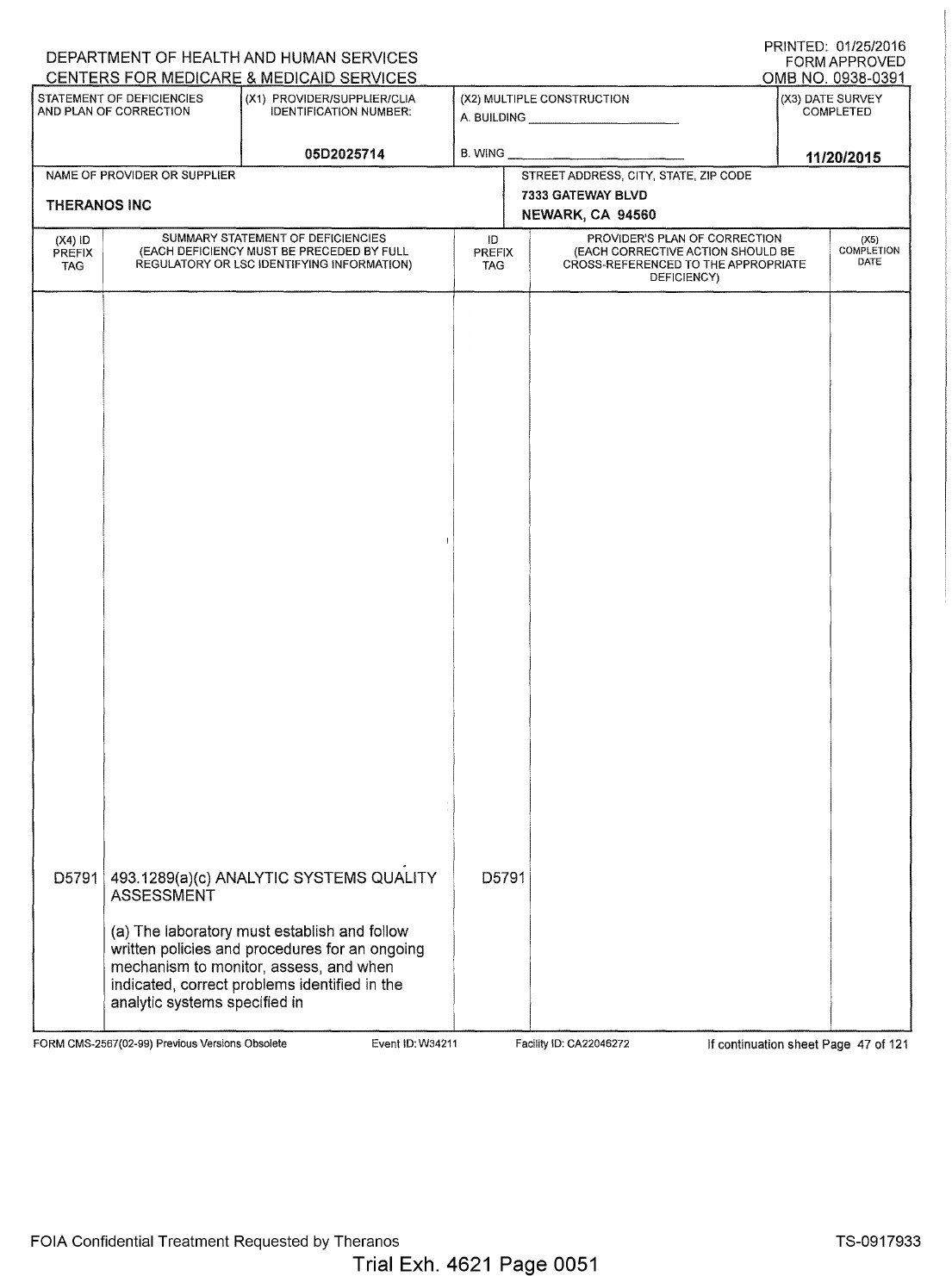
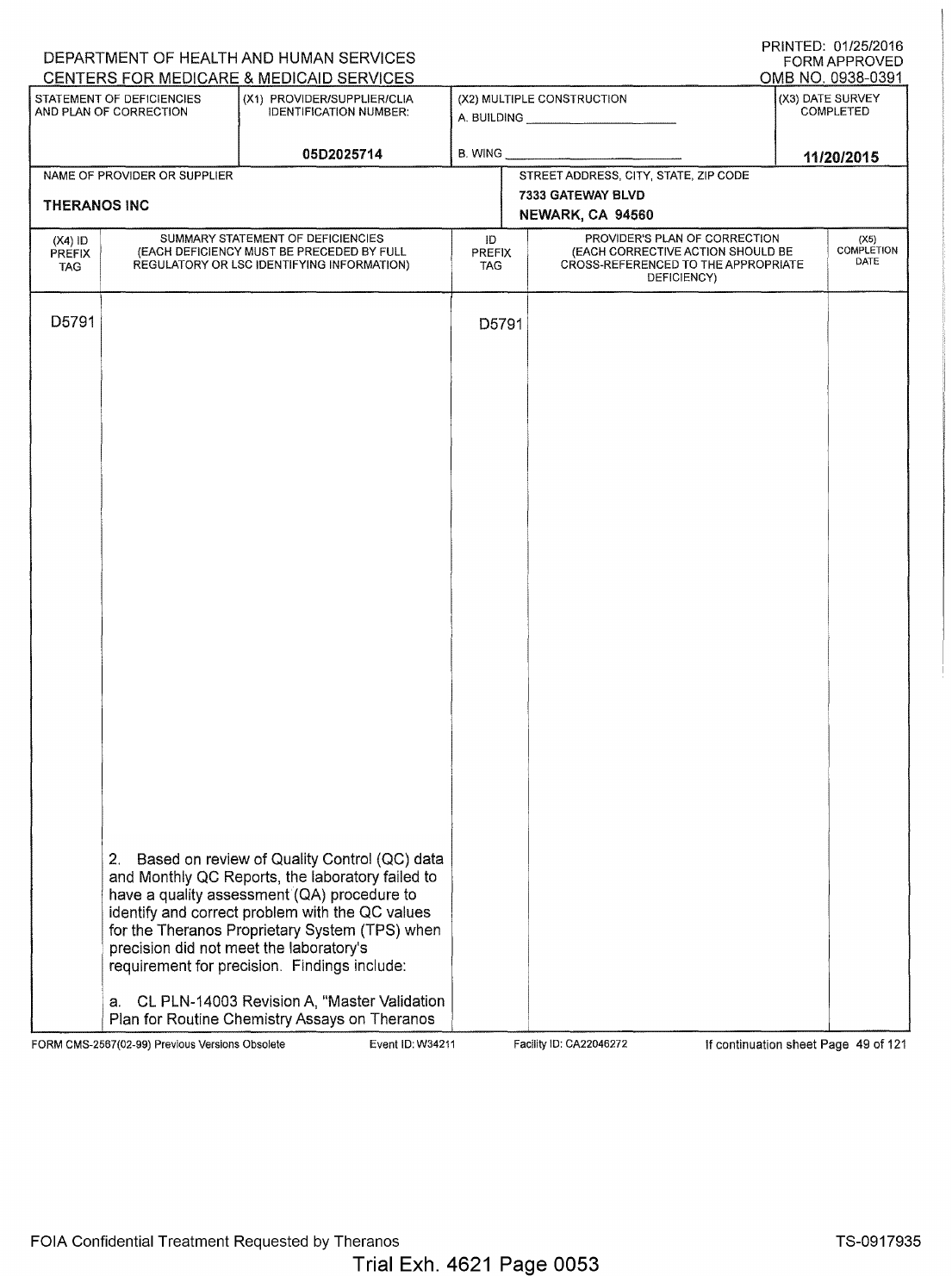
The report then lists QC precision problems across multiple assays and devices. But page 14 gives us another crucial piece of the responsibility story: CMS says the monthly QC reports were signed by the Laboratory Director, with the March 2015 report signed later in November.
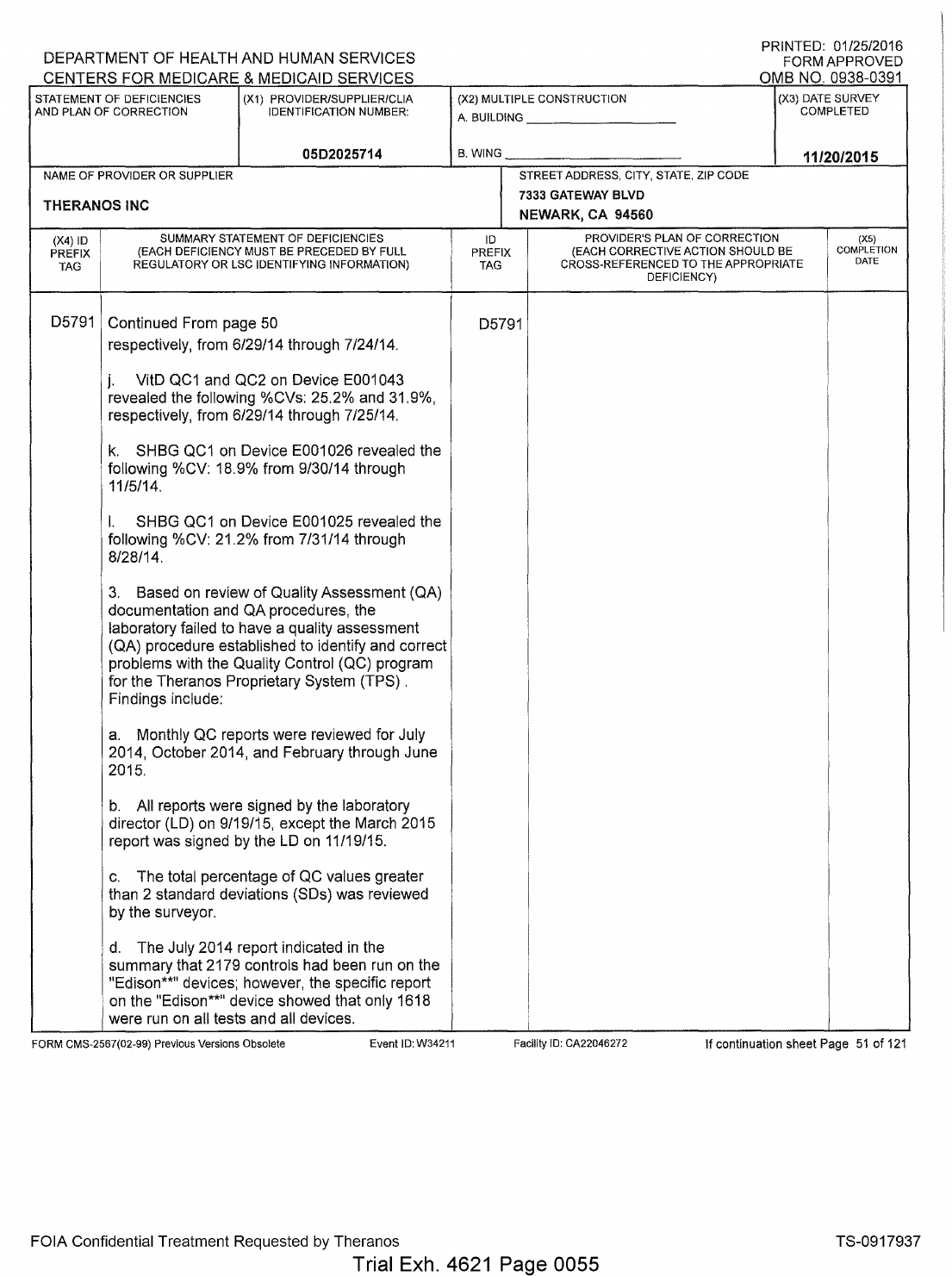
THE LABORATORY DIRECTOR HAD DEFINED CLIA RESPONSIBILITIES FOR THE LAB.
THAT DOES NOT, BY ITSELF, DETERMINE THE LEGAL RESPONSIBILITY OF OTHER PEOPLE.
THE MACHINE IS NOT THE LAB.
CMS documented serious deficiencies inside the Theranos clinical laboratory. But a laboratory is a system made up of multiple components:
So the question isn't whether CMS found problems.
The question is:
THE ANALYZER?
Was the instrument itself unable to perform as required?
THE ASSAY?
Was the analytical chemistry or method the source of the failure?
THE OPERATOR?
Were procedures or safeguards not followed correctly?
THE QUALITY SYSTEM?
Was monitoring, comparison, documentation or corrective action inadequate?
THOSE ARE NOT
THE SAME FAILURE.
A deficiency in laboratory operations should not automatically be treated as proof that the underlying analytical technology failed.
THEN FOLLOW THE EVIDENCE.
DON'T CONFUSE THE PLANE WITH THE PILOT.
If an aircraft incident occurs, investigators do not answer every question by saying, “the airplane was bad.” They separate the system:
Laboratory problems deserve the same discipline.
A BAD PILOT DOESN'T PROVE A BAD PLANE.
A BAD LAB DOESN'T PROVE BAD TECHNOLOGY.
TO KNOW WHAT FAILED, YOU HAVE TO SEPARATE THE TWO.
THERANOS BUILT MORE THAN A TESTING PLATFORM.
The technology story is not only about the physical Edison analyzer. Theranos was also developing chemistry, assay protocols and sample-processing methods designed around small-volume testing.
THE MACHINE WAS ONE PART.
THE CHEMISTRY WAS THE METHOD.
That distinction matters because an assay chemistry does not have to live forever inside one specific box. A validated method can, in principle, be adapted to different instrument architectures when the required liquid handling, incubation, washing, detection and analytical specifications are supported.
The source material itself describes the concept of “virtualizing” methods and presents Theranos technologies as modules for sample processing, reagents, detection and automation. The broader idea is a testing method that could potentially be integrated into other laboratory workflows — including higher-throughput systems — rather than treating the Edison enclosure as the entire invention.
The chemistry, sample preparation, protocol and detection method are part of the testing system too.
AND WHAT ABOUT DILUTION?
Dilution is not unusual in laboratory medicine. Commercial analyzers routinely perform onboard dilution when an assay protocol requires it.
COMMERCIAL ANALYZER
Sample → onboard dilution → assay
The instrument can automatically dilute the specimen as part of its programmed workflow.
THERANOS WORKFLOW
Sample → protocol-required pre-dilution → analyzer
If a Theranos assay protocol required dilution before analysis, the dilution step could occur before the sample entered the analytical instrument.
THE IMPORTANT QUESTION IS WHETHER THE VALIDATED PROTOCOL REQUIRES IT AND IS FOLLOWED.
NOW GO BACK TO THE EDISON.
In the earlier Just Blood chapters, we examined the technology: chemistry, assays, light generation and detection, the Edison/TSPU architecture and the Theranos–Pfizer angiogenesis study.
This chapter asks a different question:
THE CLIA LAB?
Those questions have to be evaluated separately. A clinical laboratory is not merely a machine sitting on a bench. It is a regulated operation made up of people, procedures, testing systems, quality controls, documentation and leadership.