
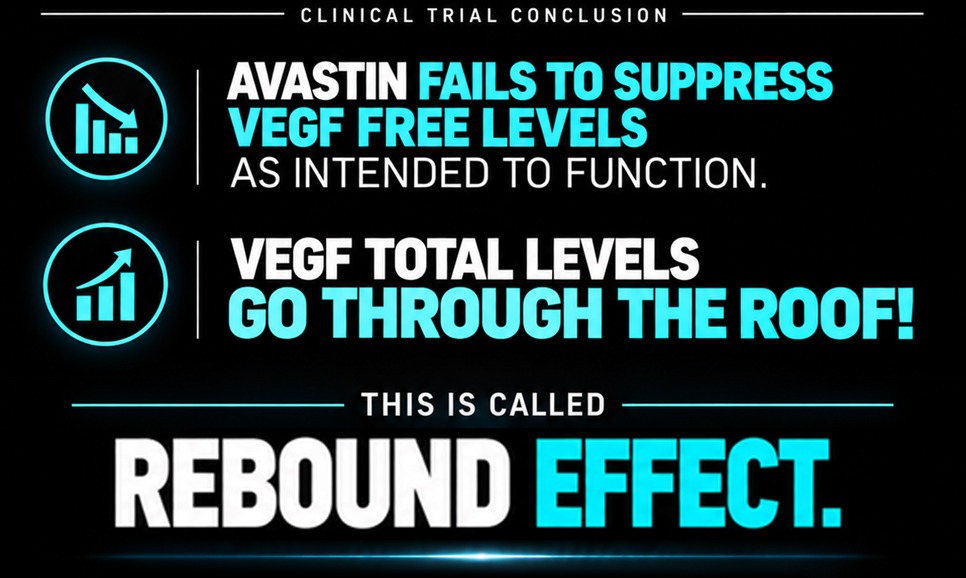
Elizabeth Holmes discovered Avastin does not work. The cancer drug Avastin fails to suppress VEGF free levels as intended to function, VEGF total levels go through the roof: rebound effect. Trial Exhibit 0143, Theranos × Pfizer.

The Tests were Validated Live at

with Scientists, Lab Directors and
Medical Technologists.
- Just Blood




Get to it Quick
Under 3 minutes

The Short Film
Under 16 minutes
AVASTIN HAS A
$100,000,000,000+
DOLLARS IN SALES.
HERE'S WHAT THERANOS DID FOR THE PFIZER STUDY.
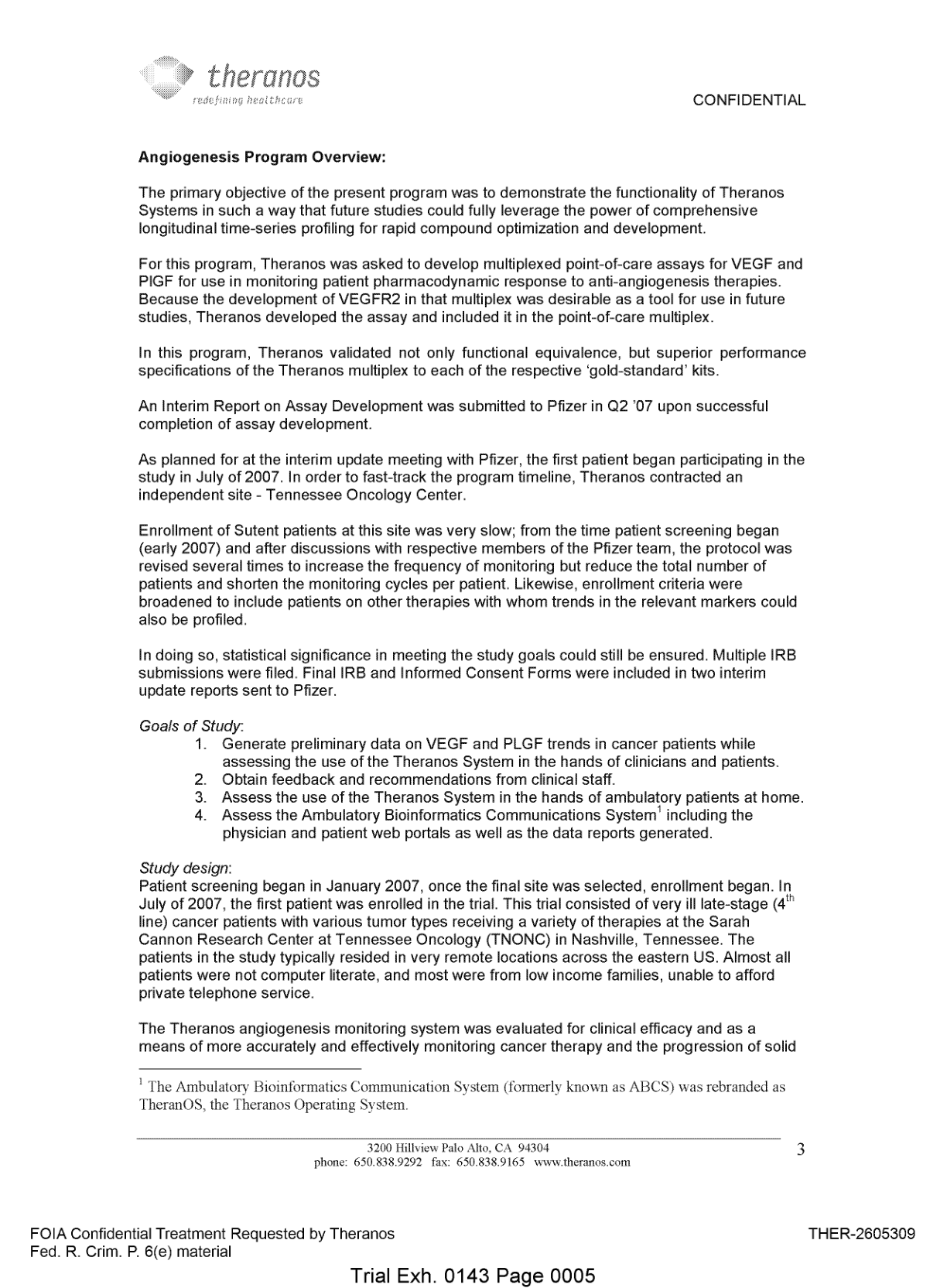
Trial Exhibit 0143 is a Theranos Angiogenesis Study Report prepared for Dr. Aidan Power of Pfizer, Inc. The program evaluated Theranos' system and angiogenesis assays in cancer patients receiving different cancer therapies.
Instead of relying on an occasional snapshot, Theranos repeatedly measured three interconnected biomarkers: VEGF, VEGFR2 and PlGF.
THINK ABOUT HORMONES.
If you've had hormone testing — especially with all the attention around HRT — you've probably seen two familiar measurements:
Testosterone is a chemical signal. It interacts with receptors and tells cells to respond.
VEGF isn't testosterone — it's a growth factor — but the basic signaling concept is similar.
VEGF is one of the signals involved in blood-vessel formation. Theranos could therefore ask something bigger than “What's the patient's VEGF?”
SOMETHING STRANGE HAPPENED.
Patients receiving Avastin produced dramatically different VEGF results. R&D Systems (what LabCorp uses) averaged 136 pg/mL. Theranos averaged 8,359 pg/mL.
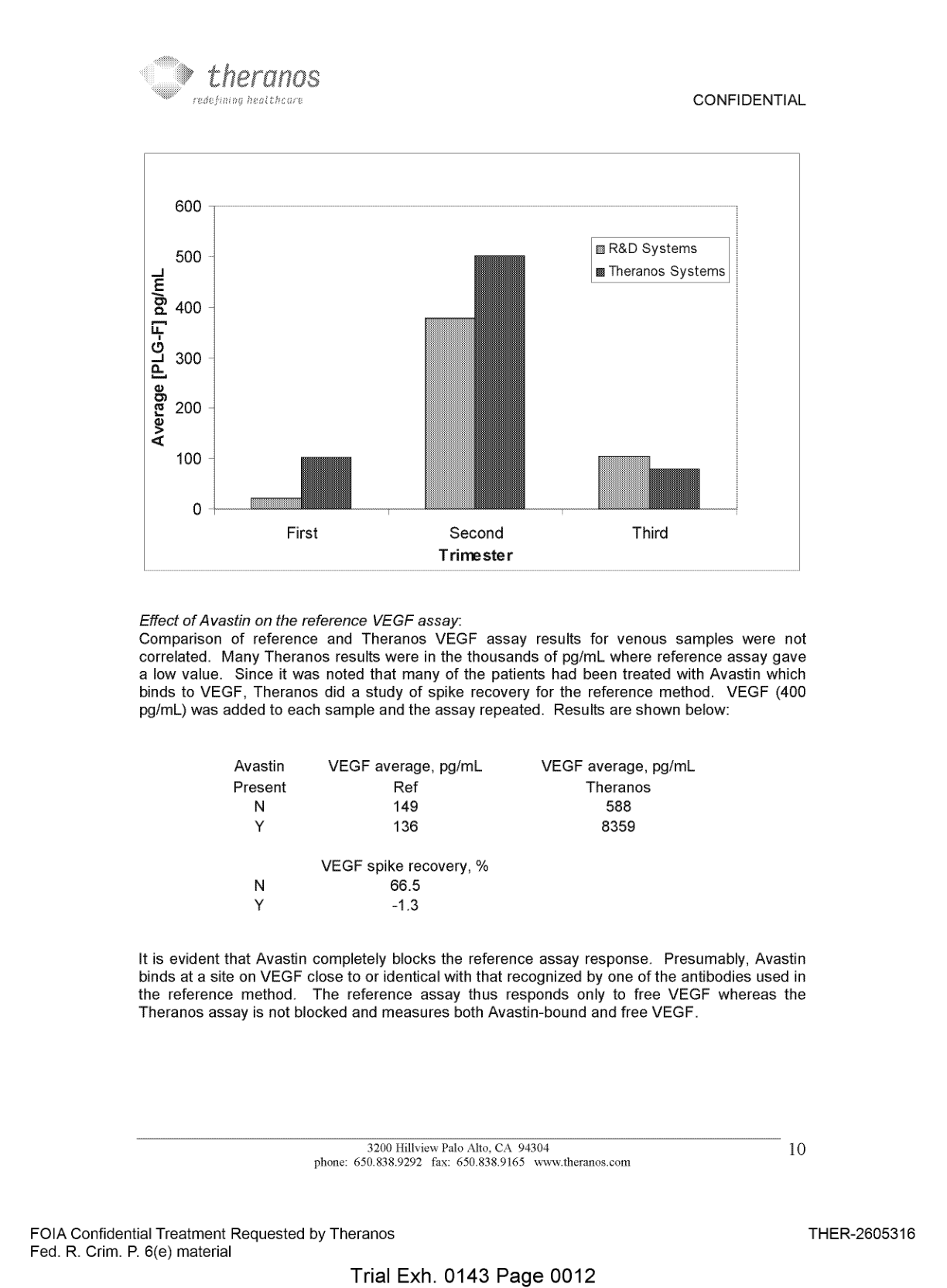
The exhibit says the R&D Systems assay responds “only to free VEGF”, while the Theranos assay measures “both Avastin-bound and free VEGF.”
THEY WEREN'T
MEASURING THE SAME THING.
Think Free Testosterone vs. Total Testosterone: related, but not the same measurement.
FREE VEGF vs. TOTAL VEGF.
~9% DIFFERENCE.
IN THE LAB WORLD, ANYTHING WITHIN 15–20% IS THE SAME VALUE.
~14× HIGHER.
VEGF WAS ONLY ONE CAMERA.
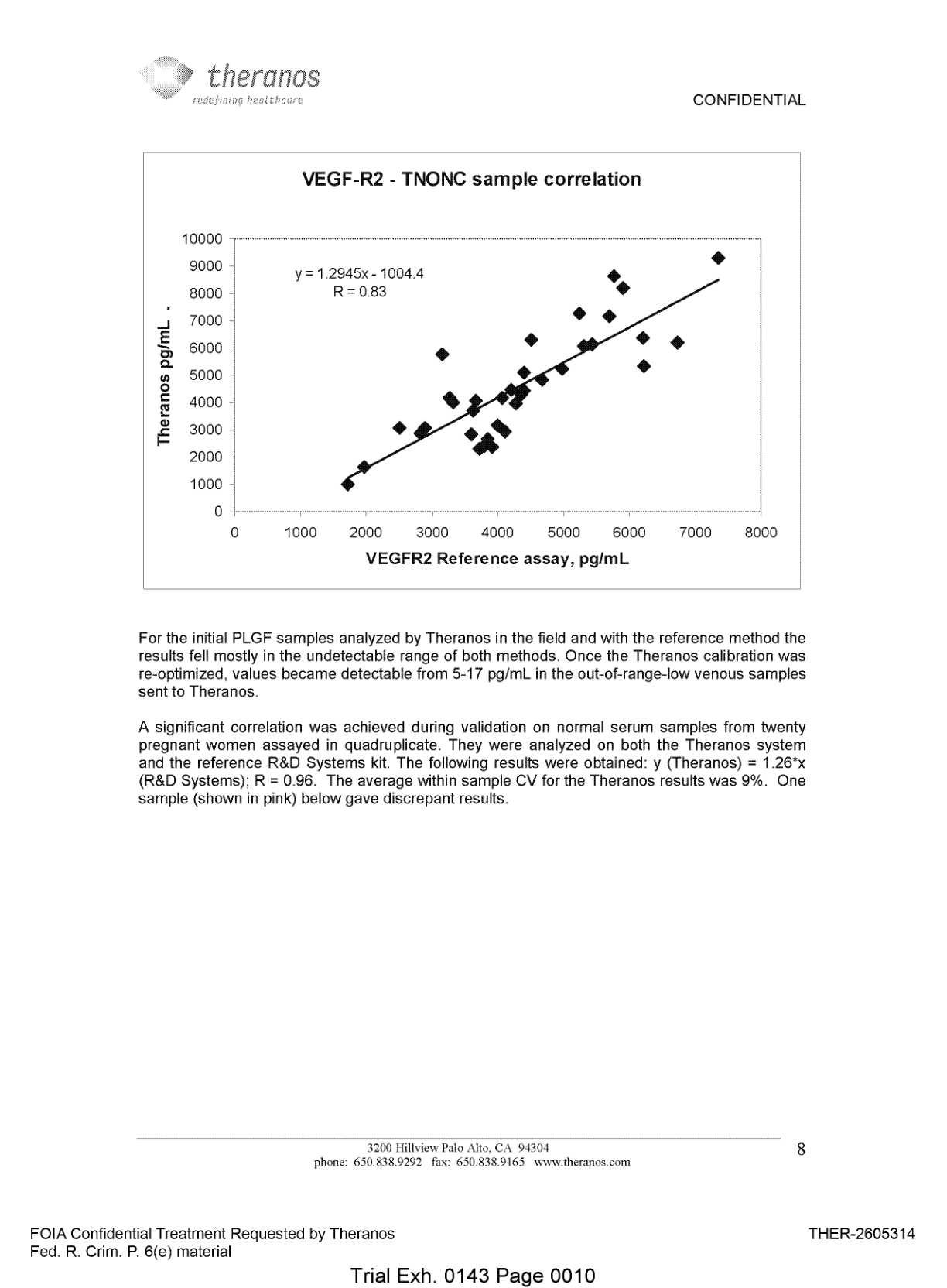
Theranos also measured VEGFR2 and PlGF.
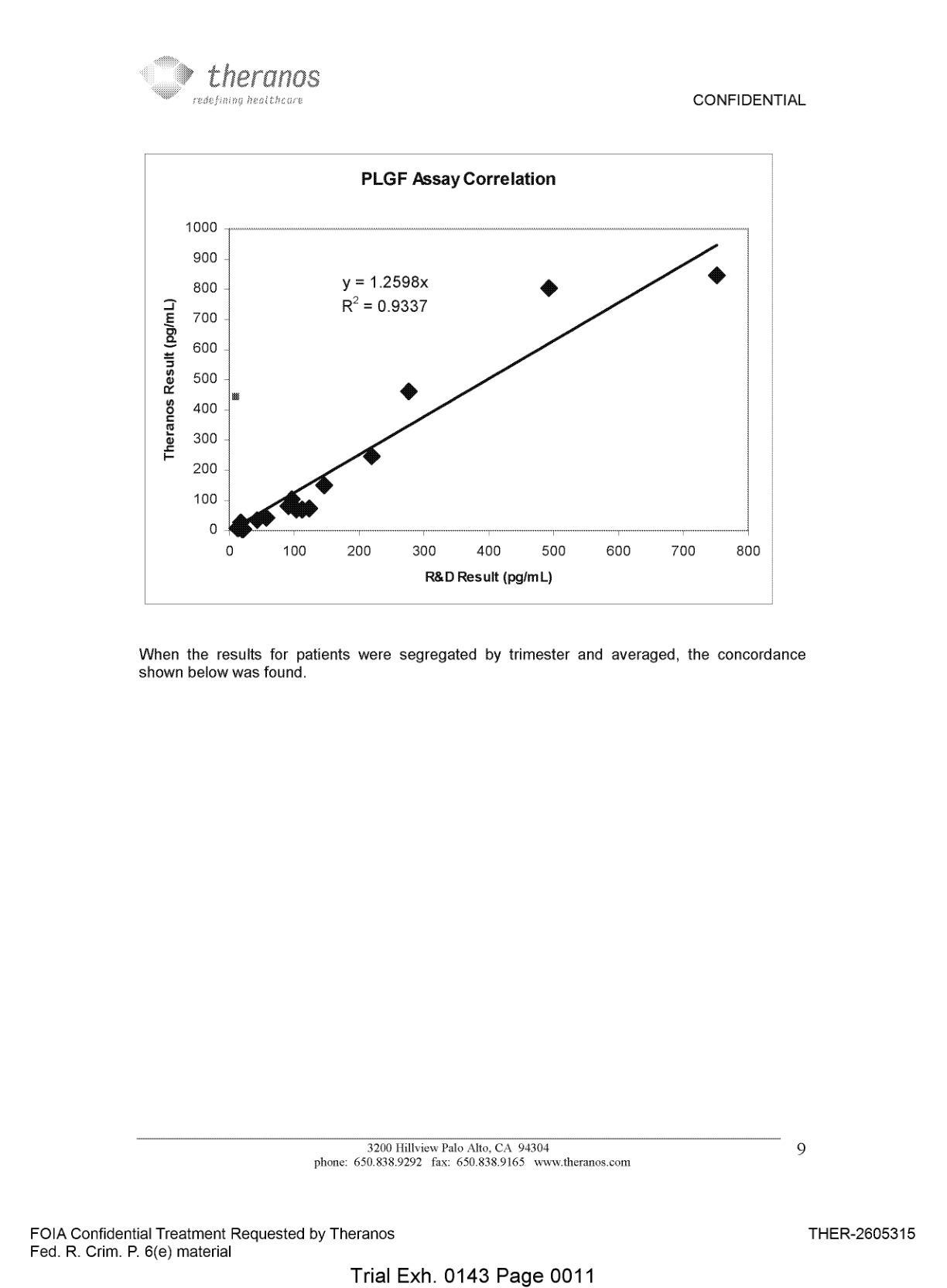
ONE BIOLOGICAL SYSTEM.
NOW WATCH THE PATIENTS.
PATIENT 14 · AVASTIN
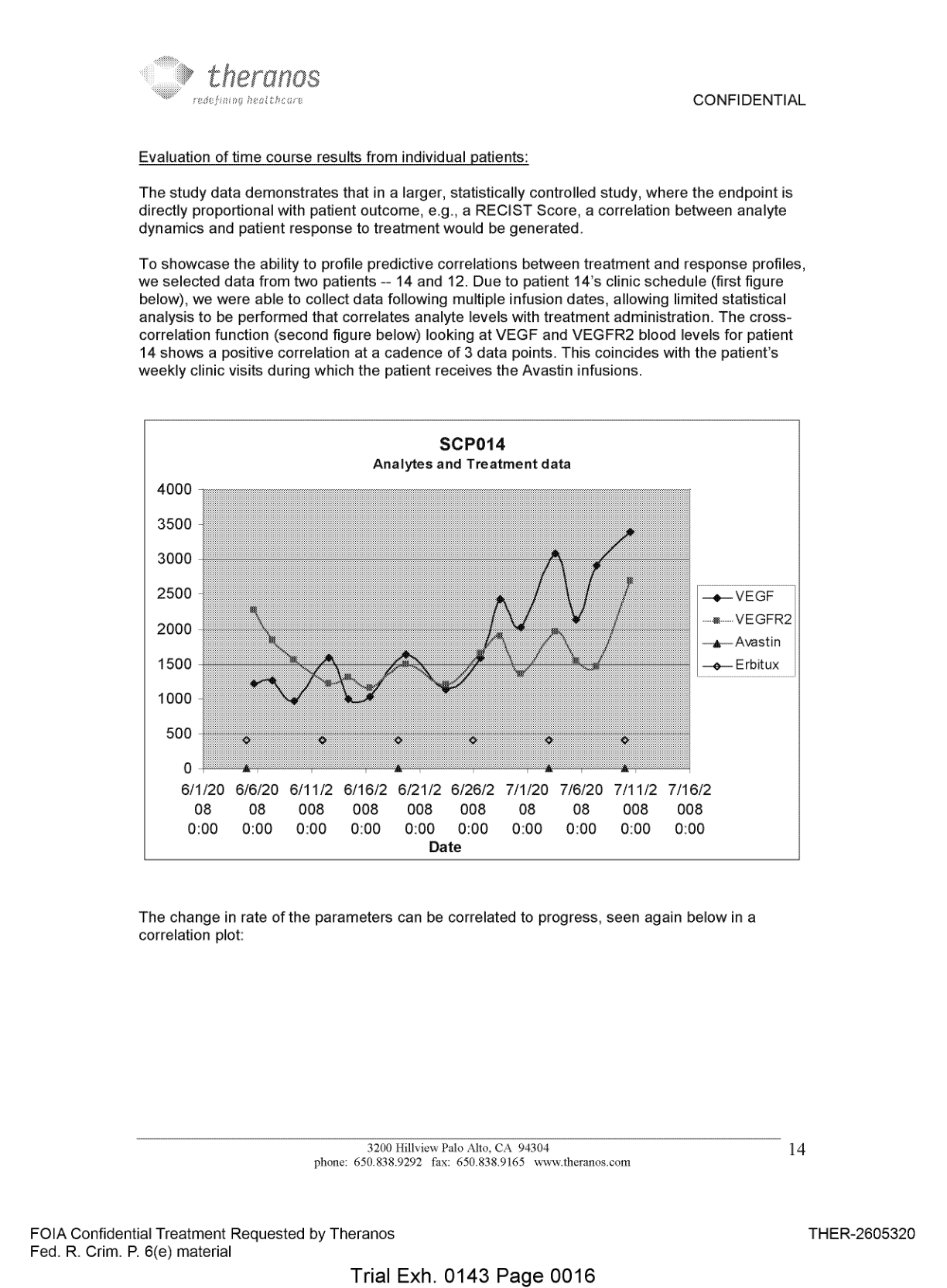
MOVING TOGETHER.
PATIENT 12 · SORAFENIB
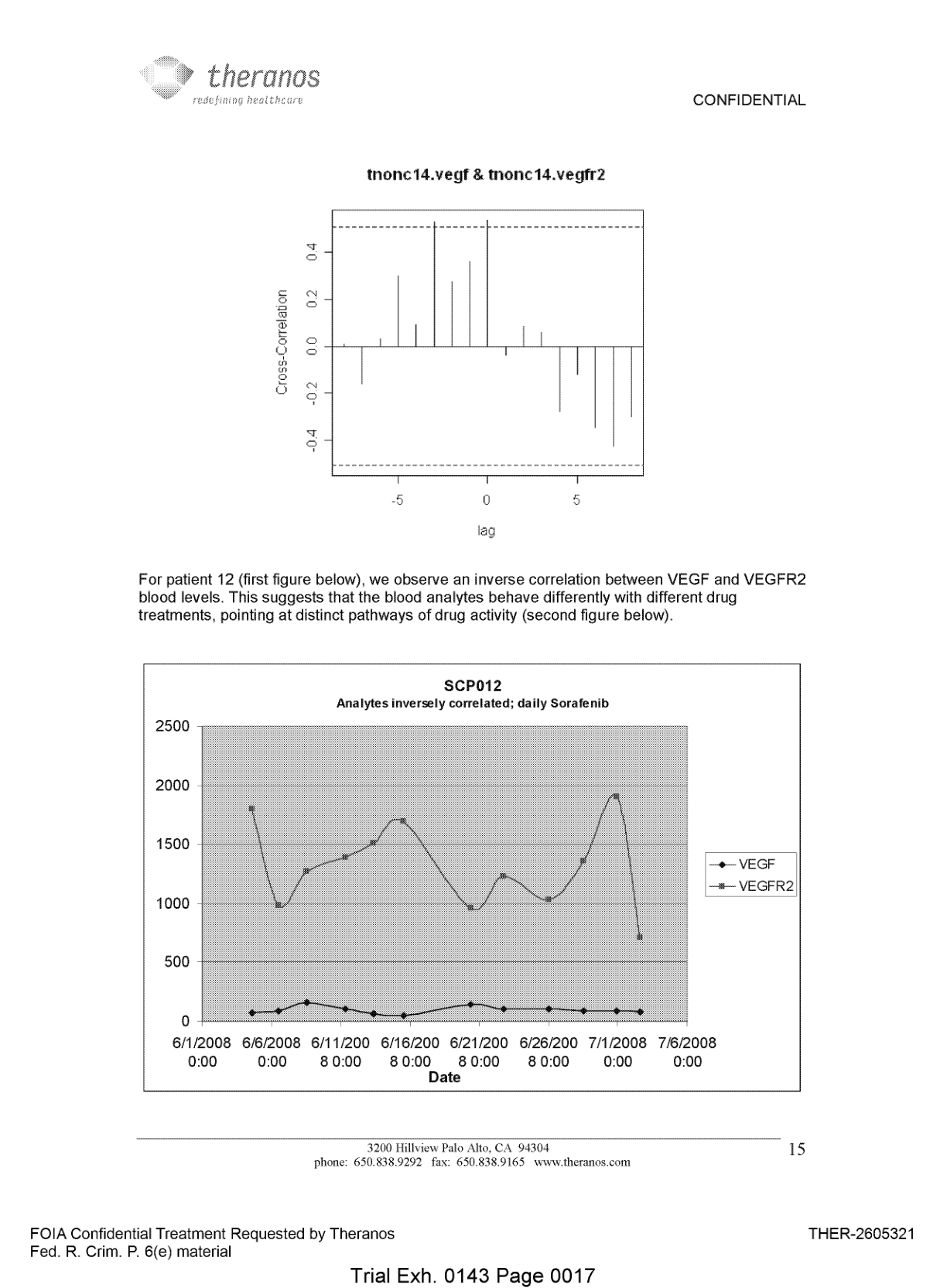
MOVING OPPOSITE.
YEARS LATER, INDEPENDENT CLINICAL STUDIES REPORTED THE SAME DIRECTIONAL SORAFENIB PATTERN.
PlGF ↑
sVEGFR2 ↓
Later clinical studies of sorafenib reported significant increases in circulating VEGF and PlGF together with decreases in soluble VEGFR2. A large phase III biomarker analysis likewise found VEGF increased while sVEGFR2 decreased during sorafenib treatment. That does not turn Patient 12 into a statistically powered trial by itself — but it makes the direction Theranos observed clinically recognizable rather than an isolated curiosity.
Independent literature: Raut et al., sorafenib circulating-biomarker study; Escudier et al./TARGET phase III biomarker analysis.
SO WHAT DOES THAT MEAN?
The goal of these cancer drugs is to interfere with angiogenesis — the signaling that helps tumors develop the blood vessels they need for oxygen and nutrients.
But biology doesn't always respond to a blocked pathway by simply shutting down.
When researchers later studied Sorafenib, they observed the same general directional pattern Theranos had noticed:
PlGF ↑
sVEGFR2 ↓
Researchers have investigated this kind of change as part of a compensatory angiogenic response: while one part of the VEGF pathway is being inhibited, other pro-angiogenic signals can increase.
BLOCK ONE ROAD.
TRAFFIC LOOKS FOR ANOTHER ROUTE.
PlGF matters because it provides another angiogenic signal and acts primarily through VEGFR1 rather than VEGFR2.
So instead of looking at VEGF alone, Theranos was monitoring multiple parts of the angiogenic system:
The angiogenic signal.
A major component of the VEGF receptor pathway.
Another pro-angiogenic signal in the VEGF family.
A tumor depends on a vascular supply for oxygen and nutrients. So inhibiting one signal does not, by itself, establish that angiogenesis has stopped. The rest of the signaling system matters too.
DON'T JUST ASK WHETHER THE DRUG HIT ITS TARGET.
WATCH WHAT THE REST OF THE SYSTEM DOES NEXT.
NOW LOOK ACROSS THE PATIENTS.
Trial Exhibit 0143 also includes a patient-by-patient table of average VEGF and VEGFR2 results by cancer type and main treatment.
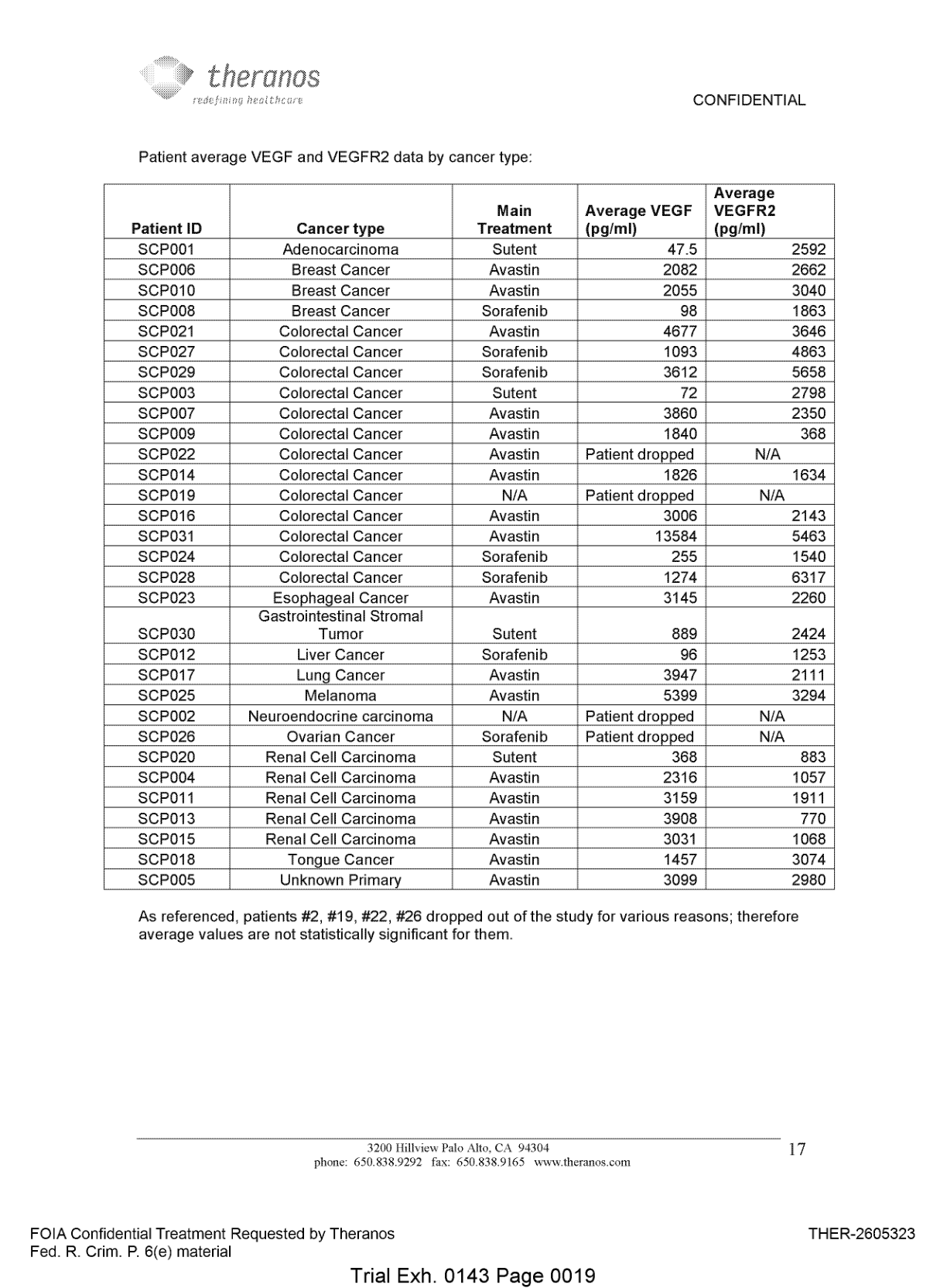
DIFFERENT DRUGS.
DIFFERENT VEGF / VEGFR2 PATTERNS.
The value of longitudinal monitoring is not just a single number. This table lets the reader step back from Patient 12 and Patient 14 and see that Theranos was collecting VEGF and VEGFR2 data across patients receiving Avastin, Sorafenib and Sutent, across multiple cancer types.
THEN ADD THE THIRD CAMERA.
PlGF.
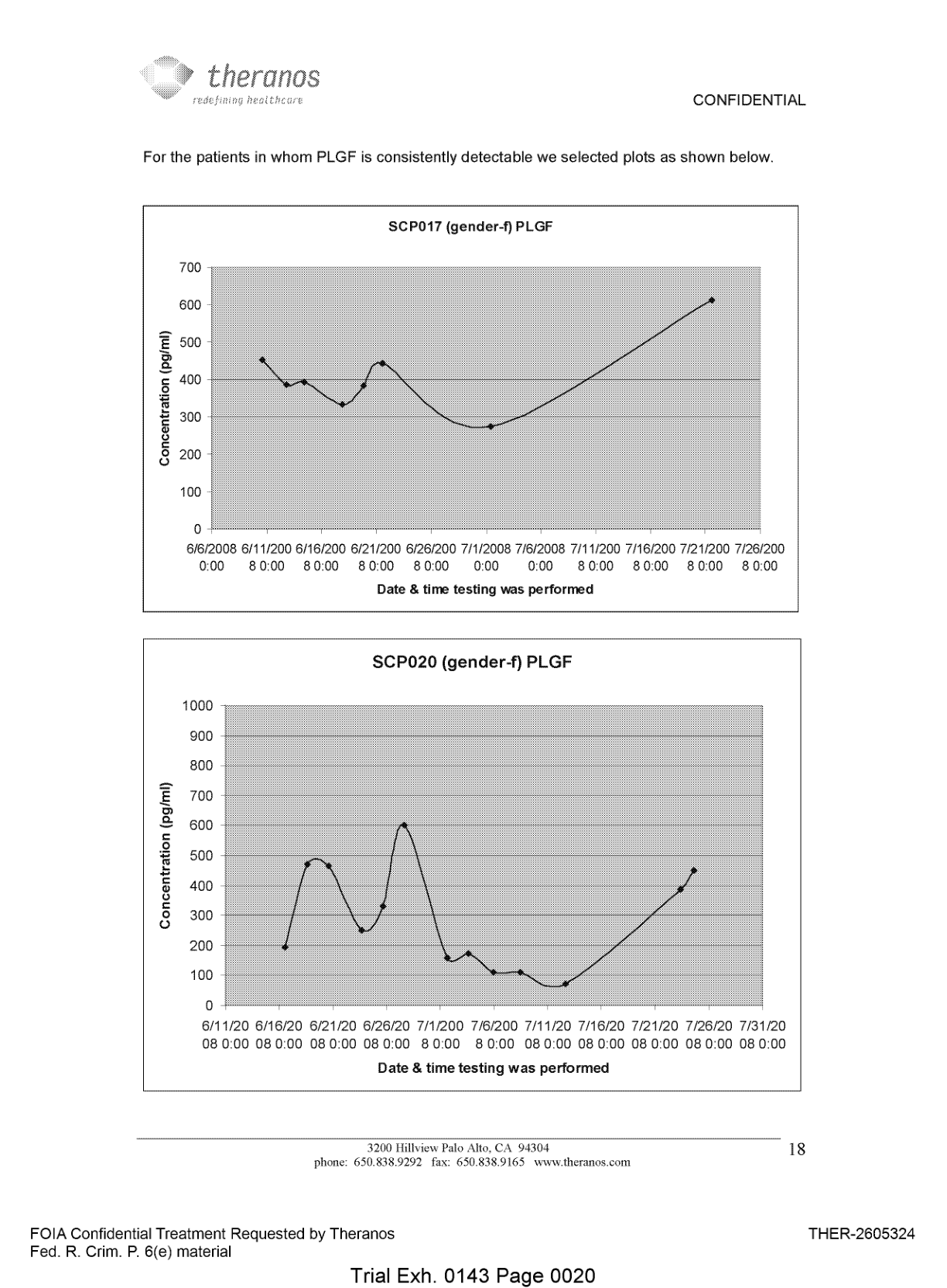
DRUG · TIME · PATIENT.
NOW PLAY THE MOVIE.
↓
VEGF · VEGFR2 · PlGF
↓
DRUG ADMINISTERED
↓
NEXT MEASUREMENT
↓
NEXT DOSE
↓
KEEP WATCHING.
THAT'S NOT JUST A BLOOD TEST.
THAT'S DRUG-RESPONSE MONITORING.
Traditional testing asks: “What's your number?”
Longitudinal monitoring can ask: “What's your pattern?”
And eventually: “How did this patient respond?”
THE EXHIBIT'S OWN CONCLUSION.
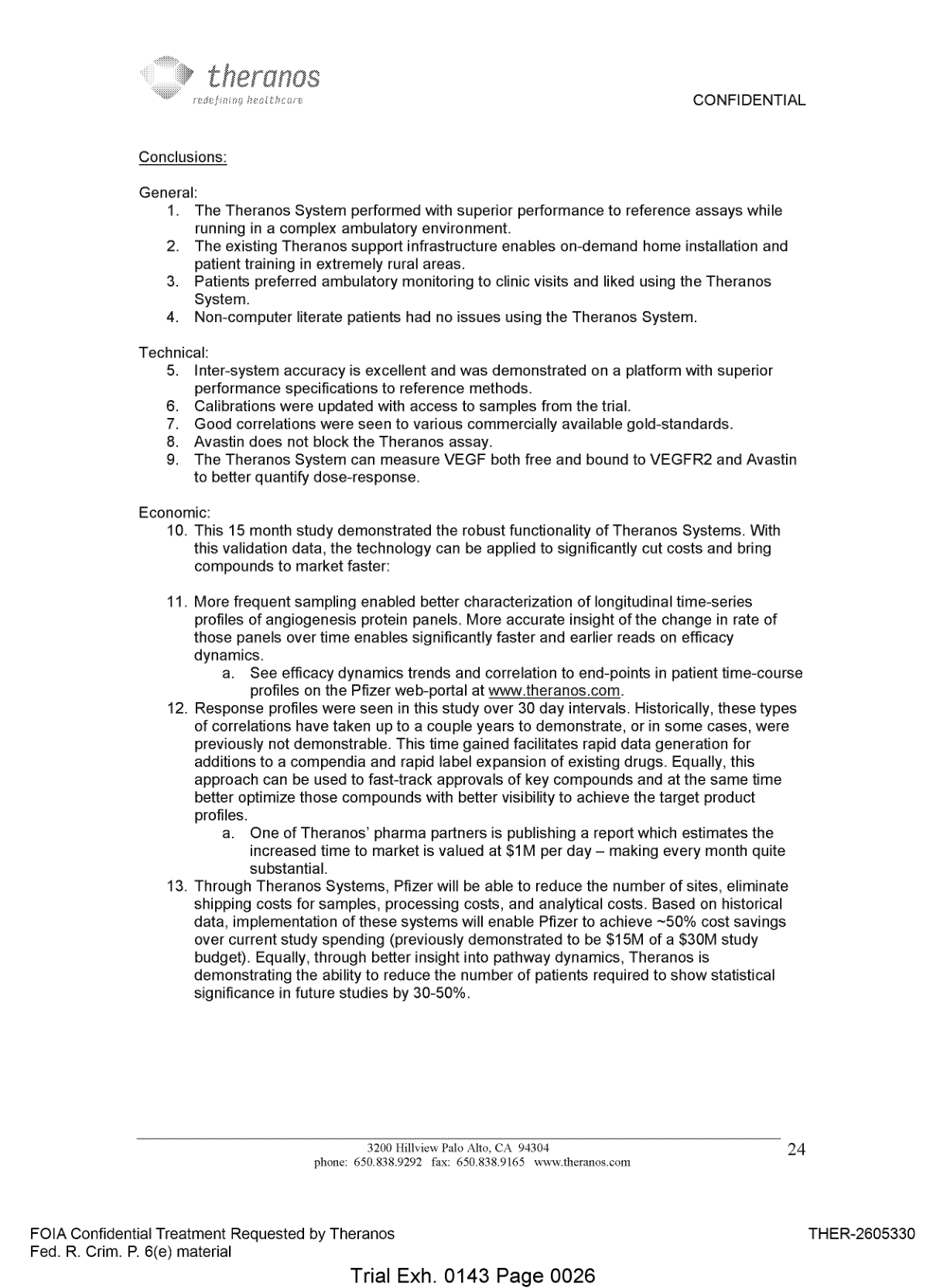
SNAP SHOTS OF CANCER PATIENTS.
THEY MADE A MOVIE. 🎥